There are endless design opportunities when customizing a garage door. For a cohesive design, learn how to match the door to the existing home finishes.
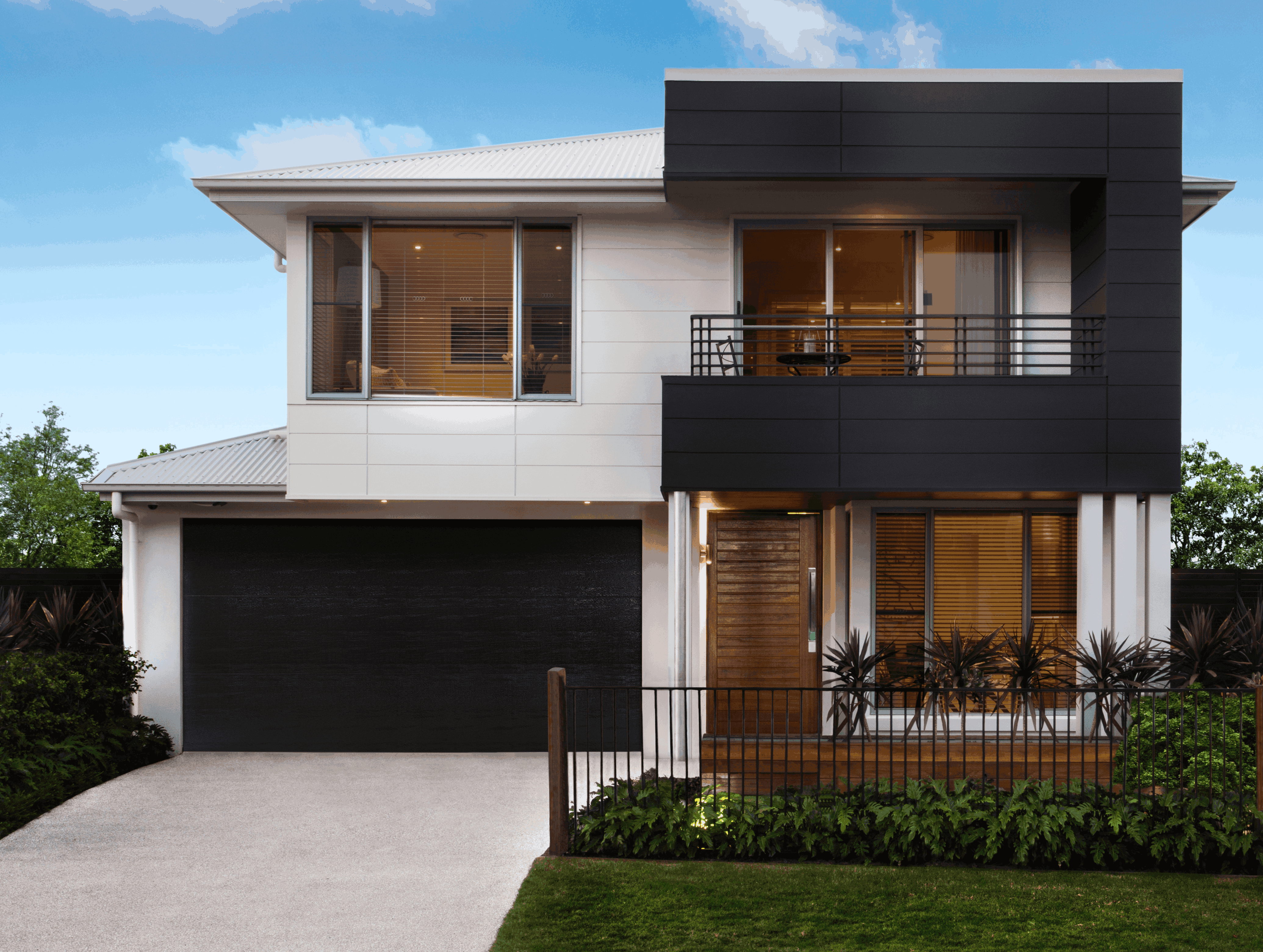
A garage door’s color affects how it looks against the home’s siding. The existing windows and masonry affect how the panels appear. To design a cohesive property, homeowners need to match the garage door to the exterior home finishes. Find out which features deserve the most attention and how to bring each element together.
Complement the Home’s Primary Color
Take a close look at the color of the home’s siding or brick. The home’s primary color should guide the garage door before incorporating accent details. This will ensure that the front exterior reads as one complete design.
A beige siding home works well with almond, sandstone, or warm white. Those shades keep the garage door close to the body color. A deep walnut door works when the home features warm accents near the porch or entry.
Cool siding calls for a different approach. A gray home with black trim can support charcoal or soft gray on the garage door. A blue-gray exterior pairs well with white when the trim has the same clean finish. The goal is to repeat the home’s color language rather than introduce a shade with no connection.
Pay Attention to Brick Undertones
Brick homes require closer color study because the surface changes in different light. Red brick leans orange or brown, while others carry burgundy or violet undertones. A garage door color from the wrong temperature family can result in a harsh appearance.
Orange-red brick suits warm neutrals because those colors respect the brick’s natural warmth. Sandstone softens the garage opening and keeps the exterior grounded. When the brick has an earthy depth, medium-brown tones are a great choice. These colors relate to the brick without copying its exact shade.
For cool red brick, charcoal is suitable for purple undertones because it provides a refined contrast. Properties that have dark lighting or a stained front door benefit from deep bronze. There are numerous color choices, but the key to selecting the door’s primary shade is to understand the property’s existing colors and tones.
Pair Wood Tones With Warm Accents
Woodgrain garage doors bring a natural richness that works especially well alongside brick, stucco, and painted siding. To create a cohesive exterior, the chosen wood tone should connect with other warm elements already present on the home, such as exterior lighting, stained shutters, or even the front door.
For example, a cedar-style door pairs beautifully with cream stucco and bronze fixtures, as the warmth in the wood echoes the finish of the lighting. This subtle repetition ties the elements together and strengthens the overall design. Similarly, deep walnut tones complement homes with dark accents or earthy stone, creating a grounded and balanced appearance.
On light exteriors, such as white siding and pale brick, a soft wood tone, like oak, introduces warmth without overwhelming the facade. Ultimately, the right choice depends on how much contrast the homeowner wants to achieve, as well as how the wood tone interacts with surrounding materials and finishes.
Choose Panels Based on Architectural Details
The existing architecture sets the foundation for how the garage door integrates with the rest of the exterior. Failing to consider panel style will cause the door to look out of place.
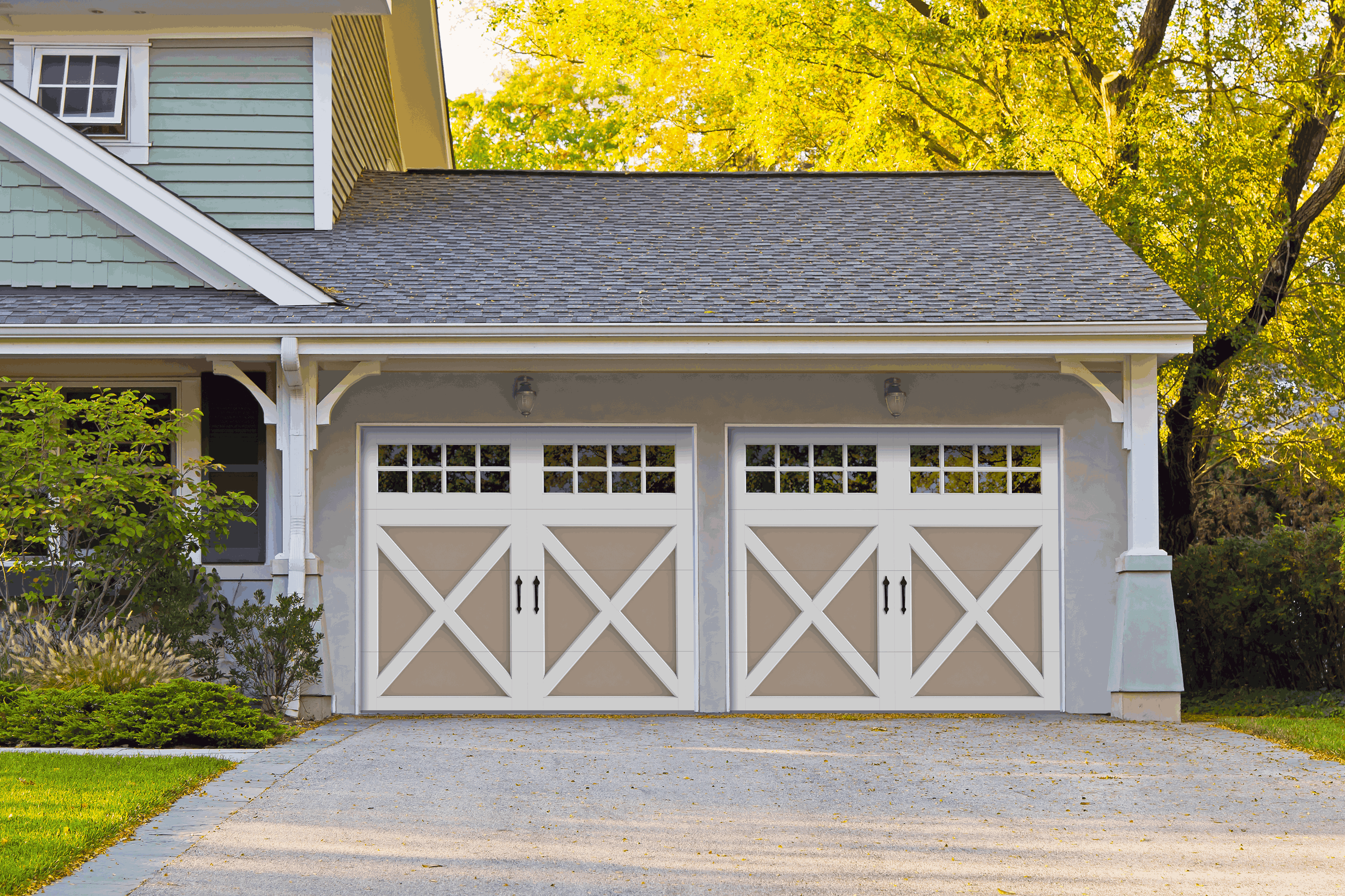
Raised panels or carriage-inspired designs suit traditional homes. These styles echo the symmetry and detailing already present in the shutters, trim, and window grids.
In contrast, modern homes call for a subtle, geometric approach. Clean lines and minimal ornamentation define contemporary architecture. Selecting flush panels or long horizontal designs is favorable to complement this style.
Integrate the Trim Color Into the Door’s Accents
Trim offers the exterior a built-in color clue. Window casing frames, fascia, and porch columns add depth to the facade. Whether the trim accent color is white or black, the shade should appear on a specific part of the garage door.
Use trim color on the garage door frame or perimeter edge to tie the opening into the rest of the facade. This approach works well when the main door color matches siding or brick.
On carriage-style doors, trim color can carry through decorative crossbucks, panel overlays, or window grids. The result is a cohesive link between the door’s accents and the home’s existing trim.
Dark trim creates a bold outcome. A cream house with black window frames supports a garage door with black hardware, black window grids, or a black outer frame. These targeted details repeat the trim color in controlled areas rather than covering the entire door surface.
Choose Windows That Suit Existing Glass Elements
When the property’s shapes and proportions align, the garage becomes an extension of the architecture. Both placement and style influence this connection.
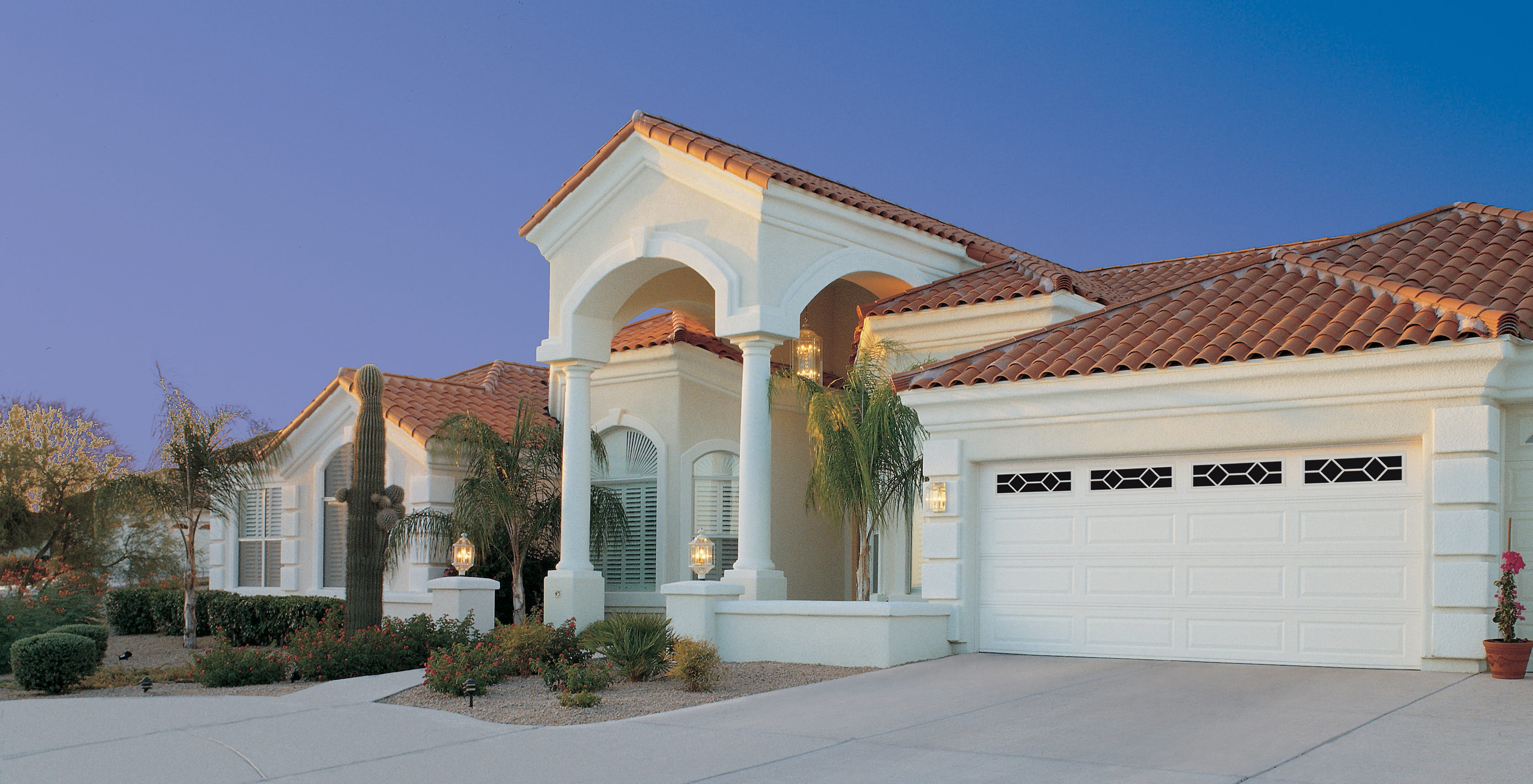
Homes with arched front windows benefit from garage door inserts that echo the same curve. The repetition creates a natural link between the garage and the main entry, reinforcing the home’s architectural character. Carriage-style doors often pair well with this approach, as their traditional design complements the curved detailing.
For contemporary homes, sleek features guide window selection. Narrow rectangular inserts arranged in a horizontal row maintain a streamlined appearance while allowing natural light into the garage. Frosted or obscure glass works well in these settings, offering privacy without interrupting the modern aesthetic.
Match the Hardware to Accent Finishes
Elements such as lighting fixtures, house numbers, and front door hardware often establish a clear direction for metal finishes. When the garage door follows that lead, the exterior design becomes cohesive.
On a farmhouse exterior, black strap hinges pair naturally with black lantern-style lighting, creating a unified appearance across the facade. This repetition reinforces the design without drawing too much attention to the hardware itself.
Homes with warm tones benefit from bronze hardware that blends into the palette. Cool color schemes are stunning with brushed nickel accents.
In each case, the goal is to choose hardware that enhances the garage door while reflecting the finishes already present on the home. Keep in mind that every finish doesn’t need to match perfectly. Nevertheless, the pieces should share a similar tone or style, so they don’t clash.
Design a Door That Complements the Whole Home
Matching garage doors to exterior home finishes becomes less about following rules and more about creating a cohesive visual story. When each element connects back to the home’s overall design, the exterior reads as balanced and intentional. Subtle coordination between colors, textures, and finishes creates a sense of unity that draws the eye across the entire facade instead of stopping at one feature.
DoorLux is a garage door company that simplifies the design and installation process. When you choose one of our custom Amarr doors, you can select a contemporary or traditional door style, the primary color, the fixture type and finish, and more. Start designing online today to find the perfect fit for your home.